
“How much does a website cost?” is a fair question, but a single number is not very helpful. A small brochure site, a conversion-focused authority site and a product launch page can all be called a website while requiring very different levels of strategy, content, design and build.
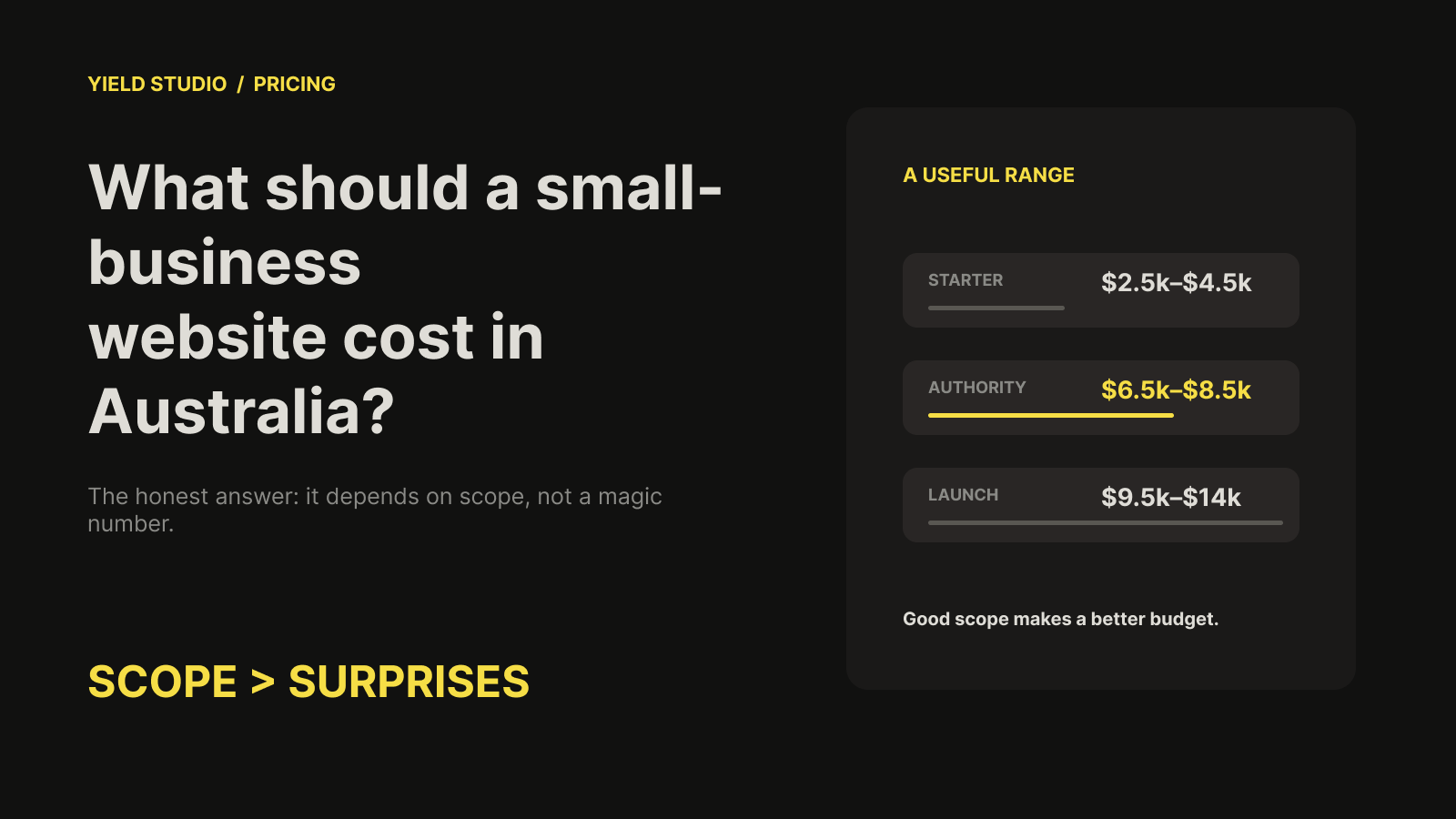
For a small Australian business, a useful planning range is roughly $2,500–$14,000+ AUD, depending on the scope and the level of expertise involved. The important part is understanding what each range is designed to achieve.
Starter: around $2,500–$4,500
This range can suit a focused, smaller site with a clear offer, a limited number of pages and content that is already close to ready. It may use a streamlined design system and a straightforward build.
It is a sensible option when the goal is to establish a credible online presence quickly, validate a new service or give referral traffic somewhere clear to land. The trade-off is less room for deep positioning, custom interaction design or extensive content support.
Authority: around $6,500–$8,500
This is the range many established service businesses should consider when the website needs to do more than confirm that the business exists.
It typically allows for clearer positioning, custom page design, a stronger conversion path, better proof, responsive implementation and a CMS that the team can maintain. The result should help a cautious prospect understand the offer and feel confident taking the next step.
Launch: around $9,500–$14,000+
A larger investment can make sense for a more complex launch, a SaaS product, a multi-service business or a brand that needs a more distinctive digital experience.
This range may include deeper discovery, messaging support, more templates, custom interactions, richer CMS structures, additional integrations and more rounds of testing. The point is not to add decoration. It is to reduce uncertainty around a more demanding business goal.
What changes the price?
- Scope. More pages, templates and content types take more planning and production.
- Strategy. Clarifying the audience, offer and conversion path before design reduces guesswork later.
- Content. Ready-to-use copy and photography lower the build burden; research, writing and art direction add time.
- Custom design. A tailored visual system takes more work than adapting a generic template, but it can create stronger differentiation.
- Integrations. CRM, booking, payments, search, gated content and other connections require testing and maintenance.
- Feedback and approvals. A clear decision-maker and consolidated feedback keep the project moving.
What a good website quote should make clear
Ask what is included, who owns the design files, where the site will be hosted, which CMS fields are editable, how many review rounds are allowed and what happens after launch.
A low initial quote can become expensive when important work is treated as an add-on. A slightly higher quote can be better value when it includes the thinking, content structure and implementation needed to make the site effective.
The best budget is the one tied to a decision
Start with the business outcome, not the number of pages. Do you need to convert referrals, launch a product, generate qualified enquiries or make a complex offer easier to understand?
Once that decision is clear, the right scope becomes easier to price. Good scope makes a better budget — and protects you from paying for features that do not move the business forward.
Planning a new site? Yield Studio can help you define the scope, recommend the right level of investment and build a site that earns its keep. Book a free strategy call.